

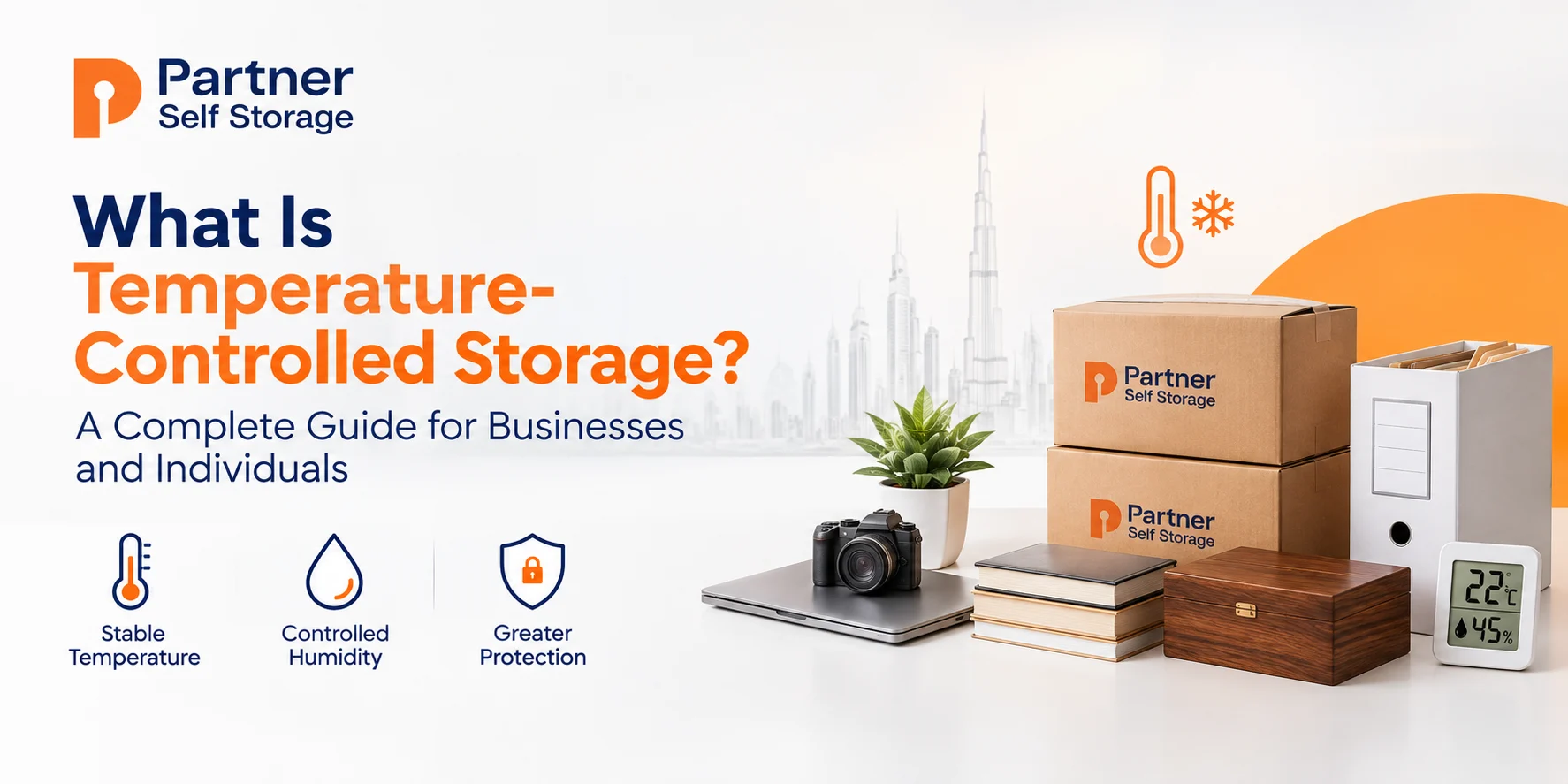
What Is Temperature-Controlled Storage? A Complete Guide for Businesses and Individuals
Not everything you put into storage can handle the same conditions. In Dubai and across the UAE, where summer temperatures can rise above 40°C, furniture, electronics, documents, stock, equipment, and other sensitive items can be affected by prolonged exposure to heat, moisture, or changing temperatures.
Temperature-controlled storage helps maintain a more stable environment than standard storage, making it a practical option for items that may be damaged by temperature fluctuations or excess humidity. The right storage conditions can matter just as much for a business storing inventory as they do for an individual keeping personal belongings.
But what does temperature control actually involve, and when is it worth paying for? This guide explains how temperature-controlled storage works, how it differs from standard storage, what it costs, and what to look for when choosing a provider.
What Does “Temperature-Controlled Storage” Actually Mean?
Temperature-controlled storage is designed to keep the temperature inside a storage space within a more stable range. Heating, cooling, and monitoring systems help reduce significant temperature changes that could affect sensitive belongings or products.
Some facilities also offer humidity control, which manages moisture levels in the air. This can be particularly relevant for the UAE, where periods of high humidity can be taken into consideration when storing materials.
The exact level of temperature and humidity control varies between providers. So, if you’re storing temperature-sensitive goods, check what environmental controls a facility provides rather than assuming that every climate-controlled unit offers the same conditions.
In short: temperature-controlled storage provides a more controlled environment than standard storage, helping reduce the effects of temperature fluctuations on stored items.
Temperature-Controlled vs. Standard Storage: What’s the Difference?
The choice between standard and temperature-controlled storage can be particularly important in Dubai, where extreme summer heat can push temperatures well above 40°C. Standard storage may be suitable for durable belongings, but temperature-controlled storage provides more stable conditions for items that can be affected by prolonged heat, humidity or temperature fluctuations.
Standard storage generally protects your belongings from theft, rain, and direct outdoor exposure, but the temperature inside the unit can still change with the weather. Temperature-controlled storage uses heating, cooling, or monitoring systems to maintain more consistent conditions.
| Factor | Standard Storage | Temperature-Controlled Storage |
|---|---|---|
| Temperature | Can fluctuate with outdoor conditions | Kept within a more controlled range |
| Humidity | Usually not actively managed | May be monitored or controlled |
| Sensitive items | May not be suitable | Better suited to temperature-sensitive items |
| Cost | Generally lower | Usually costs more |
| Best for | Durable, less sensitive belongings | Items affected by heat, cold or moisture |
The choice depends on what you’re storing, how long it will remain in storage, and the conditions at the facility.
For example, storing garden equipment for a short period may not require temperature control. Documents, electronics, wooden furniture, or certain business inventory may need more stable conditions, particularly during long-term storage.
It’s also worth checking exactly what a provider means by temperature-controlled or climate-controlled. Facilities differ in the systems they use and the conditions they maintain.
Who Actually Needs Temperature-Controlled Storage?
In Dubai, temperature-controlled storage can be particularly relevant for items that may spend several months in storage during periods of extreme summer heat. Businesses and individuals should also consider whether their belongings are sensitive to humidity or changes in environmental conditions.
It can be worth considering for:
Businesses Storing Stock or Equipment
Businesses may use temperature-controlled warehousing to store products, materials, equipment or records that need more stable conditions. This can be particularly relevant when inventory will remain in storage for an extended period.
Electronics and Technology
Computers, monitors, appliances and other electronic equipment can be sensitive to excessive heat, cold and moisture. A more stable storage environment can help reduce exposure to conditions that may affect these items over time.
Wooden Furniture and Musical Instruments
Wood responds to changes in temperature and humidity. Prolonged exposure to unsuitable conditions can contribute to warping, cracking, swelling or other forms of damage.
Documents, Books and Collectables
Paper, photographs, artwork, and other delicate materials can deteriorate when exposed to excessive moisture, heat, or fluctuating conditions. More controlled storage can provide a better environment for long-term preservation.
Long-Term Storage
The longer items remain in storage, the more important their surrounding conditions can become. If belongings will be stored for months or longer, temperature-controlled storage may be worth considering, particularly for sensitive materials.
The right choice ultimately depends on what you’re storing, how long you’re storing it and the conditions it needs. When in doubt, ask the storage provider what temperature and humidity controls are available for your unit.
How Temperature-Controlled Units Actually Work
Temperature-controlled storage facilities use heating, cooling and monitoring equipment to keep indoor conditions more stable than standard storage spaces.
The exact setup varies between providers, but a typical facility may use:
Heating and Cooling Systems
HVAC systems help maintain the desired temperature inside the storage area. The system may adjust conditions as the temperature outside changes, rather than allowing the storage environment to follow outdoor temperatures.
Temperature Monitoring
Facilities can use sensors or monitoring equipment to track conditions within storage areas. Regular monitoring helps identify changes that could affect stored goods.
Humidity Management
Some temperature-controlled facilities also manage humidity. This may involve dehumidification or other systems designed to control moisture in the air.
Insulated Storage Areas
Insulation helps reduce the effect of outdoor temperature changes on the indoor environment. It can also make it easier for heating and cooling systems to maintain consistent conditions.
The level of environmental control depends on the facility. If you’re storing items with specific temperature or humidity requirements, ask the provider what range they maintain and how conditions are monitored.
How to Choose a Temperature-Controlled Storage Provider in Dubai, UAE
Choosing a storage service provider in Dubai involves more than just comparing unit sizes and monthly payment.
The right storage provider should offer more than a controlled indoor temperature. Before booking a unit, check how the facility manages its storage environment and whether it suits the items you need to store.
Consider the following:
Ask What “Temperature-Controlled” Means
Find out what temperature range the facility maintains and whether conditions are actively monitored. If your items have specific storage requirements, make sure the facility can accommodate them.
Check Humidity Control
Temperature control and humidity control are not the same thing. If you’re storing materials that are sensitive to moisture, ask whether humidity is monitored or managed.
Look at the Facility
If possible, visit the facility before committing. Check the condition of the storage areas, cleanliness, security and general maintenance.
Consider Access and Handling
Think about how often you’ll need to access your items and whether the provider offers services such as collection, delivery, loading or unloading. Businesses may also need arrangements that support regular stock movement.
Review the Costs
Ask for a clear breakdown of the storage price and any additional charges. Comparing providers based only on the advertised monthly rate can make it harder to assess the actual cost.
Ask About Monitoring and Support
Find out how storage conditions are monitored and what happens if there is an equipment failure or a significant change in temperature. A provider should be able to explain its approach clearly.
Choosing a facility based on these practical factors can help you find storage that fits both your items and your requirements, rather than simply choosing the cheapest available unit.
How Partner Storage Delivers Reliable Temperature Control
When storing belongings or business inventory in Dubai, the storage environment matters. High summer temperatures and periods of humidity can affect certain materials and products, particularly when they remain in storage for several months. Partner Storage provides storage options for businesses and individuals looking for a secure and suitable place to keep their belongings, stock, or equipment.
If you’re considering temperature-controlled storage, the right option depends on what you’re storing, how long it will remain in storage and the conditions it needs. Partner Storage can help you identify a suitable storage solution based on your space, access and storage requirements.
Before storing temperature-sensitive items, speak with the Partner Storage team about your requirements. You can confirm the environmental controls available and discuss whether the selected storage option is appropriate for your belongings or inventory, particularly during Dubai’s hotter months.
Choosing the right storage environment can help reduce exposure to avoidable temperature and humidity-related issues, giving you greater confidence when storing sensitive belongings or business inventory for longer periods.
Is Temperature-Controlled Storage Worth It?
In Dubai and across the UAE, temperature-controlled storage can be worth the additional cost when items are sensitive to heat, humidity, or changing conditions, particularly when they will remain in storage through the hotter months.
For durable belongings that are only being stored for a short period, standard storage may be enough. For electronics, wooden furniture, documents, collectables, business inventory and other sensitive items, a more controlled environment can be a sensible choice, particularly for long-term storage.
Before choosing a facility, consider:
- What you’re storing
- How long it will remain in storage
- Whether it is sensitive to temperature or humidity
- What environmental controls the facility actually provides
- The total cost, including any additional services
The goal isn’t to choose the most advanced storage option available. It’s to choose storage conditions that are suitable for what you’re keeping.
If you’re unsure which option is right for your belongings or business stock, speak with a storage provider about your specific requirements before booking.

Author
info@partnerstorage.aeRelated posts
UAE Self-Storage Market: Size, Regulations, and Growth Outlook (2024–2030)
The self-storage market in the UAE is really growing at a great pace and becomin

How to Protect Your Furniture During Home Renovations in Dubai: The Ultimate Guide
Since 2012 in the self-storage industry in Dubai, we’ve worked with hundreds o
How to Store Important Documents and Files Safely in Dubai
Dubai’s heat can be tough on the documents and electronic devices you carr