

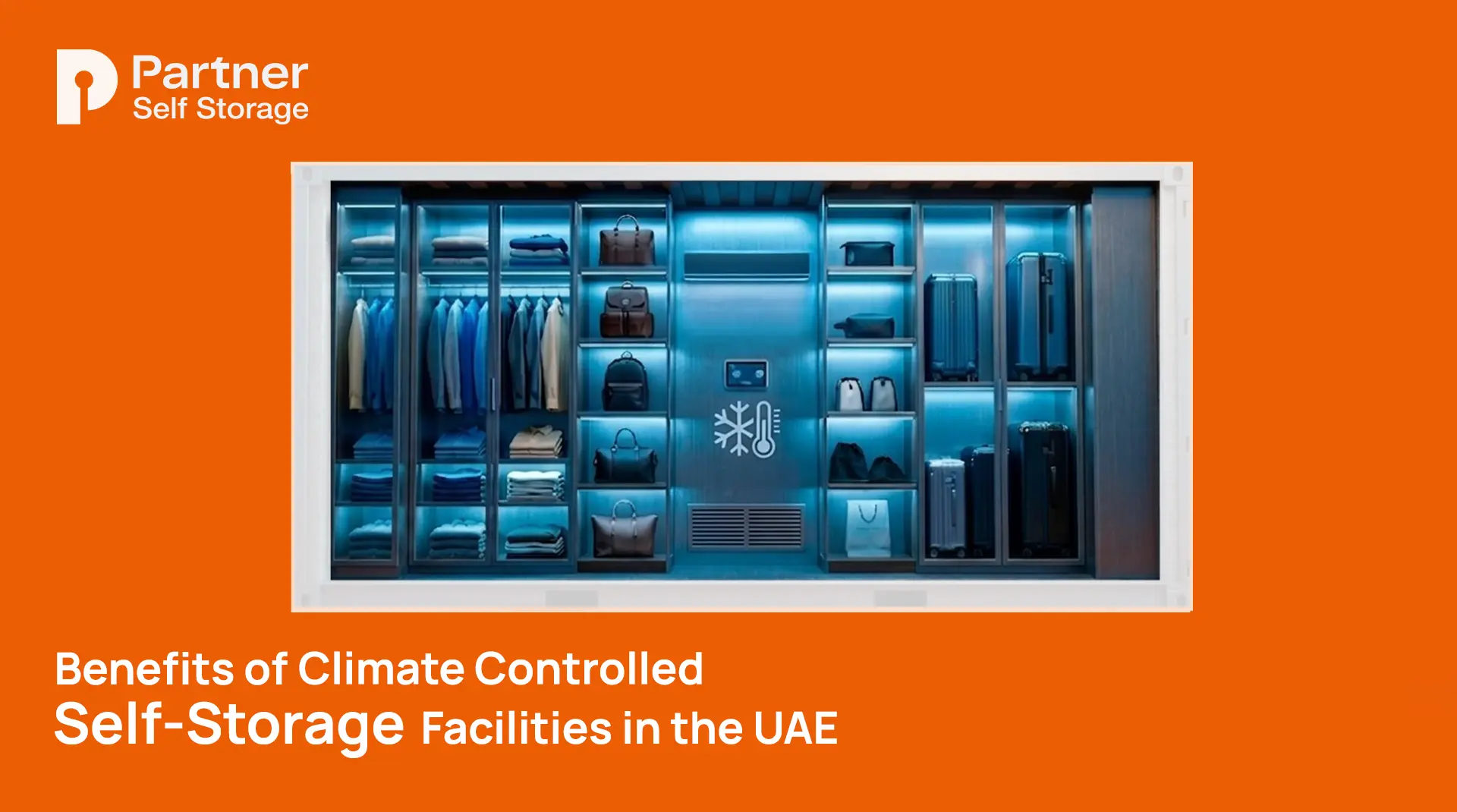
Benefits of Climate-Controlled Self-Storage Facilities in the UAE
Step outside on a midsummer afternoon in Dubai or Abu Dhabi. You will immediately feel the intensity of a desert climate. The heat is real, and the 40 degree C temperature can be incredibly hot. Of course, we can stay comfortable in the air-conditioned rooms. But our stored belongings do not have that luxury.
Think about the items left in standard storage units. The furniture will bake, electronics will corrode, and fabrics will absorb moisture until they smell musty and degrade. That is where climate-controlled storage solutions can be extremely handy.
In such a demanding environment, climate-controlled self-storage isn’t a luxury. It’s the practical solution to preserving your belongings and investments against the extremes of nature.
This blog is an attempt at helping you understand why these facilities have become increasingly crucial across the Emirates.
The intense climate challenge in the UAE – An overview
Want to know what makes it obvious to invest in climate-controlled storage in the UAE? Before that, it may be practical to understand the unforgiving conditions you are likely to encounter in the hot climate.
Extreme temperature swings
The temperatures in the UAE reach up to 40 degrees and stay that way for almost half of the year. The interior storage can be even higher because of the trapped heat. This extreme temperature can have a serious effect on materials such as wood, plastic, or leather.
These materials can expand and contract repeatedly at different rates. This results in issues such as warping, cracking, and peeling over time.
You can find severe issues with these temperature swings. Vinyl records warp, adhesives loosen, and electronics degrade as internal components succumb to thermal stress.
Humidity – The Invisible Threat
The humidity across the coastal cities is another severe concern. Cities like Dubai, Abu Dhabi, and Sharjah often face humidity levels exceeding 60%. This allows moisture to penetrate the porous materials. This is particularly evident in materials such as fabrics, books, and cardboard.
This penetration can result in mildew, stains, and odors. If you have artwork or paper products, they will begin to curl and deteriorate. A high level of humidity can also provide a breeding ground for mold spores. These pests can attack anything organic
Sand and Dust – The Desert’s Constant Companion
Well, we are discussing the desert climate. How can we not mention dust and sand? The Shamal winds sweep across the Arabian Peninsula. They carry ultra-fine sand and dust particles that can seep through microscopic gaps.
The traditional storage units come with basic ventilation and limited sealing. They may not be able to protect the surfaces from dust buildup. The abrasive dust particles can damage electronics, musical instruments, and upholstered furniture. Even a very thin layer of dust can clog circuits, dull finishes, and ruin the fabric’s texture.
The climate-controlled units maintain filtered ventilation systems and sealed interiors. This prevents dust particles from infiltrating the circuits or fabrics.
What Exactly Is Climate-Controlled Storage?
When we mention climate control or climate-controlled storage, people tend to confuse it with air conditioning. Climate control is much more than mere air conditioning. In fact, it comes with highly sophisticated technology and engineering.
Remember
|
A climate-controlled storage unit maintains a stable internal temperature. This specific temperature is maintained throughout the year.
The climate-controlled storage solutions from Partner Storage focus on the following important factors –
- Temperature: The temperatures are usually kept between 18°C and 26°C.
- Humidity: The humidity is managed between 45–55% relative humidity (RH). This helps in preventing mold, rust, and material shrinkage.
Modern storage facilities incorporate integrated HVAC systems. They circulate purified air and continuously monitor fluctuations. Many storage providers also use dehumidifiers, HEPA filters, and insulation in walls, ceilings, and floors.
The table below should give you a clear idea of the differences between the standard storage spaces and climate-controlled storage solutions –
Feature | Standard Storage | Climate-Controlled Storage |
Temperature Fluctuations | Mirrors outdoor conditions, reaching 45–50°C | Maintained between 18–26°C |
Humidity Level | Varies, often above 60% | Consistently maintained at 50–55% |
Dust Protection | Minimal, often breezy ventilation | Fully sealed with filtered airflow |
Pests and Rodents | Prone to infestations | A cooled, sealed environment deters pests |
Material Impact | Accelerated wear and damage | Extended longevity and preservation |
Key Benefits and What Needs Protection
Climate-controlled storage is beneficial for homeowners. In addition, it is also useful for small businesses, collectors, and expatriates relocating across the Emirates. The UAE self-storage market generated $602.5M in 2024 and is projected to reach $859.2M by 2030 (CAGR of 6.3%). Shows high market trust and demand.
Key storage standards
|
In fact, these storage solutions provide you with plenty of benefits across multiple areas –
Wooden and Leather Furniture
Wood and wooden items expand and contract due to extreme temperatures and humidity. This can lead to cracks and brittleness. Continuous exposure to humidity and temperature can dry out the wood’s grain. Moisture can make the wood swell and warp.
Leather absorbs humidity. This can make it develop splits and moldy spots. Proper climate-controlled storage will help keep the materials safer and stronger.
Take this example –
A Dubai family moving abroad stored their solid oak dining table in a standard facility one summer. Three months later, they found it cracked across the grain and discolored. The repair cost nearly equaled the savings on cheaper storage.
Electronics and Appliances
High humidity and temperatures are the die-hard enemies of electronics. These two can cause internal condensation. That would subsequently result in short circuits. Extreme heat can break down the plastic casings and solder joints. Items such as TVs, home audio systems, printers, computers, kitchen appliances, and gaming consoles require a dry, cool environment.
Climate-controlled storage helps you keep these items safer. This is done with humidity control, which keeps the humidity below 55%.
Artwork, Collectibles, and Media
We tend to make one primary mistake with the artwork and collectibles. We tend to leave them in areas that are not air-regulated. This can negatively impact your paintings and artwork.
Painting may fade or develop bubbles. The canvas would generally loosen. vinyl records, CDs, and photographs degrade rapidly when heat disrupts polymer stability.
The Business Case: Why UAE SMEs & E-commerce Need It
The UAE market is known for its entrepreneurial and real estate growth. Along with this growth, the self-storage market has grown quite consistently. Today, many startups, SMEs, and e-commerce operators rely heavily on storage for inventory management and supply chain flexibility.
Explosive E-Commerce Growth
According to IMARC Group’s 2024 report, the UAE’s e-commerce market hit $125 billion. This should reflect on an economy that increasingly thrives on online retail. These services sell several temperature- and humidity-sensitive items. A warehouse lacking humidity control can render stock unsellable in weeks.
Use of climate-controlled self-storage can help protect and safeguard these items. These self-storage providers help small brands that sell candles, perfumes, candies, or skincare products.
Preserving Operational Readiness
The packages can be damaged by corrosion, mold, and temperature. These issues can result in loss of margins for the businesses. Proper maintenance of humidity levels between 45 and 55% can help reduce the risk of package damage.
This will also help your business in achieving fewer returns and fewer replacements. Apart from that, stable conditions make inventory audits, photography, and packaging easier.
Why It’s Worth the Premium?
Of course, climate-controlled storage comes at a premium. It is about 20 to 40% higher than the cost of standard storage units. But, believe us, the benefits offered to you are way above the cost.
You should ideally think of it as an investment in security and safety. You are not just paying to keep your valuables safer but also investing in peace of mind, guaranteed preservation, and the extended lifespan of your goods.
Conclusion: Why Climate Control Is No Longer Optional
The UAE has embraced higher standards of living, business, and infrastructure. This has enhanced expectations regarding storage. The UAE is known for unforgiving temperatures, high humidity, and frequent sandstorms. That is exactly why it is important to stop neglecting environmental control.
You may be an individual safeguarding artwork or an entrepreneur managing inventory. In either case, climate-controlled self-storage is the smartest investment in preservation. It transforms a temporary holding space into a secure micro-environment. You can get a high degree of protection, longevity, and peace of mind.
Contact Partner Storage today to explore our premium climate-controlled storage solutions. Schedule a facility tour or consultation and discover how strategic storage can safeguard your belongings through every UAE season.

Author
info@partnerstorage.aeRelated posts

How to Choose the Best Moving Company in Dubai?
So, you have found a perfect apartment in Dubai Marina or a spacious villa in Ar
Is Self Storage in Dubai Safe and Secure? Security Features You Should Look for
Not everything you put into storage can handle the same conditions. In Dubai and

How to Store Seasonal Decorations Without Cluttering Your Home and Business
Seasonal decorations can quickly create clutter when stored at home or in the wo