

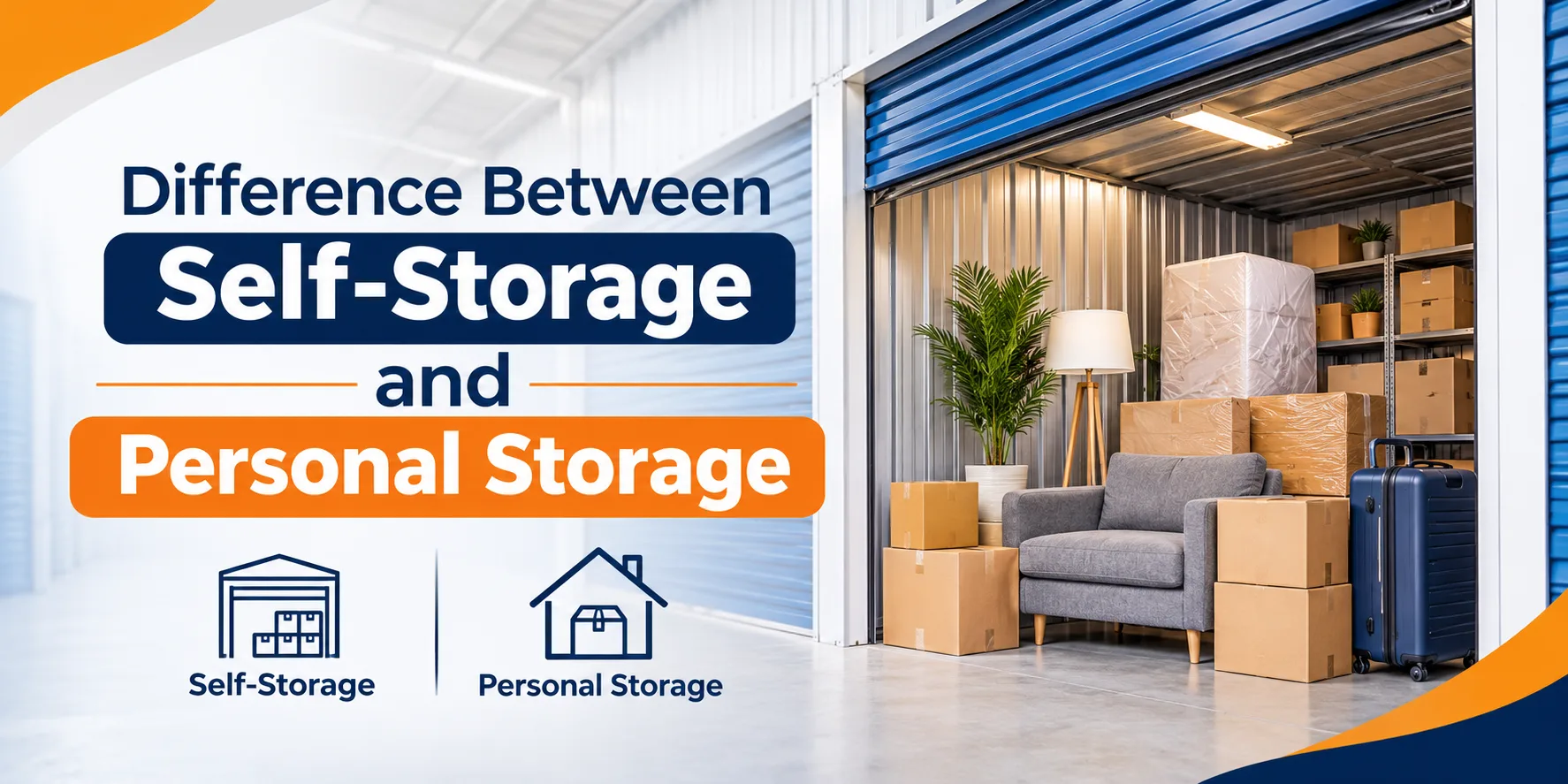
Difference Between Self-Storage and Personal Storage
You are leaving a Dubai apartment before your next lease starts. Or your villa renovation is about to begin and the furniture has nowhere to go. A quick search for storage solutions UAE shows “self-storage”, “personal storage” and “storage units”, and they sound interchangeable.
They are not quite the same. This guide explains the difference between self-storage and personal storage in plain terms, so you can match the option to your situation and avoid paying for the wrong thing.
What Is Self-Storage?
Self-storage is a rental arrangement. A self-storage facility divides its space into private units of different sizes. You choose a unit, move your belongings in and lock it. You decide what goes in, how it is arranged and when you collect it.
Key Features of Self-Storage
- A private, enclosed unit that only you (and anyone you authorise) can open.
- Customer-managed access. You visit the facility to add or remove items. At Partner Storage, standard access is 8:00 am to 6:00 pm on working days, and public holiday access is by appointment. Bring a valid Emirates ID or other accepted ID when you visit.
- Choice of size. Units range from small to room-sized, so you pay for the space you need. Partner Storage offers 12 sizes, from 15 sq ft lockers to 250 sq ft villa rooms.
- Flexible terms. Many providers offer monthly rental. Partner Storage has a one-month minimum, then rolls over month to month with no long-term commitment. A yearly plan gives you the 12th month free.
Self-storage describes how the service works, not who uses it. Families, students, landlords, expats and small businesses all rent self-storage units.
What Does “Personal Storage” Mean?
“Personal storage” describes the purpose (storing personal items), not a standard service. Because there is no single definition, different providers and searchers mean different things. In the UAE it usually refers to one of four options:
- Self-storage used for household items. The most common meaning. Same service, personal use.
- Smaller personal storage lockers. Compact spaces for a few boxes, bicycles, golf clubs or seasonal items. Partner Storage’s 15 sq ft Mini Locker suits documents, a laptop and travel bags, while the Large Locker takes large suitcases, winter wardrobes and a TV up to about 55 inches.
- Full-service or pickup-and-delivery storage. The company collects your items, stores them and returns them on request. Partner Storage’s team collects belongings from your doorstep, and you can book a delivery when you want items back. Pickup and delivery charges are quoted after an assessment.
- Informal storage. A spare room, balcony, a friend’s villa or a relative’s home. It costs little but offers no facility-level security.
Before comparing personal storage units on price or size, check exactly which of these a provider means.
Self-Storage vs Personal Storage: Comparison Table
| Self-storage | “Personal storage” (depends on meaning) | |
|---|---|---|
| What it is | A rented, enclosed unit in a professional facility | An umbrella term: personal-use units, lockers, full-service storage or informal storage |
| Access | You access your own unit (at Partner Storage: 8 am to 6 pm on working days; holidays by appointment) | Varies: self-access, provider retrieval, or open access at home |
| Typical size | Wide range, from small units to room-sized spaces (15 to 250 sq ft at Partner Storage) | Often smaller: lockers, a few boxes or one room’s contents |
| Who handles moving | You, movers you hire, or the provider’s collection team | You, or the provider in full-service models |
| Security and climate control | Facility security; Partner Storage has 24/7 CCTV, 24/7 manned security, restricted access and fully air-conditioned, temperature-controlled units | Varies widely; none at home or with friends |
| Best for | Moves, renovations, decluttering, seasonal items, small business stock | Small loads, or a hands-off service where the provider does the work |
When to Choose Self-Storage
Self-storage is usually the better fit when:
- You are moving or between homes. Store furniture while you wait for a lease to start or a handover to complete.
- You are renovating. Keep furniture away from dust, paint and contractors, whether in a villa or an apartment.
- You want control and privacy. You decide what goes in, when it comes out and how it is arranged.
- Your plans may change. Partner Storage’s one-month minimum and month-to-month renewal suit expats, students and anyone with an uncertain timeline. To end the rental, give at least 7 days’ written notice before the next billing date.
- You run a small business. Stock, documents, event equipment or seasonal inventory can sit in a unit while you save on office or warehouse costs.
- You are decluttering. Free up living space without throwing away items you may want later.
When “Personal Storage” May Be the Better Fit
A different type of personal storage may suit you better when:
- You only have a few items. A small locker or compact unit may be enough, so you do not pay for space you will not use.
- You want a hands-off service. If you would rather not pack, carry or transport anything, choose a provider that collects and returns your items. Partner Storage offers doorstep collection, delivery on request and packing supplies.
- It is very short-term and low-value. A few boxes at a friend’s home may do, provided you accept the risk of damage, loss or limited space.
If you are unsure, start with three questions: how much are you storing, how often will you need it, and do you want to handle the moving yourself?
How Much Space Might You Need?
Unit size depends on your furniture, the number of boxes and how efficiently you pack. A few practical steps:
- List your large items (sofa, bed, wardrobe, dining table, mattress) and measure them in metres.
- Count boxes and note which can be stacked.
- Allow access space if you will need to retrieve items later.
- Ask for a size recommendation. For a furnished one-bedroom apartment, Partner Storage recommends its 75 sq ft Standard Room.
Partner Storage Unit Sizes at a Glance
| Unit size | Unit name | Typically fits |
|---|---|---|
| 15 sq ft | Mini / Large Locker | Documents, laptop, travel bags, suitcases, small electronics |
| 25 sq ft | Mini Box Room | 10 to 15 boxes, bicycles, golf clubs or small furniture |
| 40 sq ft | Budget Room | Off-season clothing, a single bed and up to 20 boxes |
| 50 sq ft | Value Room | A queen bed, small sofa, large TV and 20+ boxes |
| 60 sq ft | Basic Room | A studio apartment and 25+ boxes |
| 75 sq ft | Standard Room | A furnished one-bedroom apartment |
| 100 sq ft | Large Room | A two-bedroom home and 40+ boxes |
| 120 sq ft | Extra Large Room |
A three-bedroom home |
| 200 to 250 sq ft | 5 BHK Villa Room | A five-bedroom villa (about a 40 ft container) |
Taking photos of your belongings and sharing them with the facility can help staff suggest a suitable unit.
Is Climate-Controlled Storage Necessary in the UAE?
UAE summers are hot and humid, and some belongings are sensitive to both. Items worth thinking about:
- Wooden and antique furniture
- Electronics and appliances
- Leather goods, clothing and bedding
- Artwork and musical instruments
- Important documents and photographs
If you are storing these for several months, choose a climate-controlled unit. All Partner Storage facilities are fully air-conditioned and temperature-controlled, with humidity regulated year-round. For durable items stored briefly, it may matter less. Good packing helps in either case: use breathable covers, avoid sealing damp items and keep items off the floor.
What to Check Before You Rent Any Storage
Whatever you call it, compare providers on the same points:
- Security. What protects the facility and the unit (locks, CCTV, staffed access)? Partner Storage has 24/7 CCTV, 24/7 manned security, restricted access and regular fire and pest control maintenance.
- Access. Hours, notice requirements and any restrictions.
- Contract terms. Minimum period, notice to end, payment schedule and deposits, quoted in AED. At Partner Storage, a deposit is not usually required. If one is requested, you are told before booking, and it is refundable within 15 working days of vacating.
- Insurance. Whether your items are covered and what you need to arrange yourself. Do not assume cover is included. At Partner Storage, goods are stored at your own risk, so insure them for full replacement value. Optional third-party storage insurance may be available.
- Prohibited items. Providers restrict items such as hazardous, flammable or perishable goods. Partner Storage does not accept flammable, explosive, toxic or corrosive materials, perishables, illegal goods, weapons, cash or precious metals, or live animals and plants. Ask for the full list.
- Moving support. Whether trolleys, packing materials or moving services are available. Partner Storage provides packing supplies, doorstep collection and domestic, international and office moving services.
- Pricing clarity. Ask for a written quote showing what is and is not included.
Which Option Suits Which Person?
- Family moving apartments: self-storage, sized to the furniture you cannot place immediately.
- Student or expat leaving for the summer: a small unit or student locker on a flexible term.
- Villa renovation: furniture storage with enough room to protect furniture from dust.
- Seasonal items (camping gear, decorations, sports equipment): a small unit or locker.
- Small business stock: self-storage with easy access for regular pick-ups. Partner Storage’s business storage covers inventory, equipment, documents and stock overflow, and its team will recommend a size after assessing your inventory.
- A handful of boxes for a short time: informal storage may be enough.
Frequently Asked Questions
Is personal storage the same as self-storage?
Not exactly. Self-storage is a defined service: a rented unit you access yourself. Personal storage is a broader term for storing personal items. It often means self-storage, but it can also mean smaller lockers, full-service storage or storage at home.
What size storage unit do I need for a one-bedroom apartment in the UAE?
It depends on your furniture and boxes. For a furnished one-bedroom apartment, Partner Storage recommends its 75 sq ft Standard Room. If you have fewer items, a 50 or 60 sq ft room may be enough. Measure large items in metres, count your boxes and share the list with the team for a recommendation.
Can I access my self-storage unit anytime?
Access hours differ between facilities. Check the times, and any booking or notice requirements, before you rent. At Partner Storage, access is 8:00 am to 6:00 pm on working days, and public holiday access is by appointment. You can also book a delivery to have items brought to you.
Is climate-controlled storage necessary in the UAE?
It is not essential for every item, but heat and humidity can damage sensitive belongings stored for long periods, such as electronics, wood, leather and documents. All Partner Storage units are fully air-conditioned and temperature-controlled.
Is personal storage suitable for small businesses?
Sometimes. Self-storage units commonly suit small businesses storing stock, equipment or paperwork. A small personal locker may be too limited for regular access or larger volumes. Partner Storage offers dedicated business storage for retailers, startups and other growing businesses.
Conclusion
Self-storage is the service; personal storage is a flexible label that can describe several services. For most UAE residents storing household belongings, the practical choice is self-storage in a unit sized to your items. If you want a hands-off service, ask directly whether the provider collects and returns your items, and what that costs.
Partner Storage offers doorstep collection, delivery on request and climate-controlled personal storage units from 15 to 250 sq ft in Jebel Ali Industrial Area 1, Dubai. Call 800 7278637 or email info@partnerstorage.ae for a free quote.

Author
pranav.k@webandcrafts.comRelated posts
How to Store Important Documents and Files Safely in Dubai
Dubai’s heat can be tough on the documents and electronic devices you carr
Student Storage in Dubai: Where to Keep Your Stuff Between Semesters
Moving out of a university residence between semesters can create a practical pr
How to Protect Your Furniture During Home Renovations in Dubai: The Ultimate Guide
Since 2012 in the self-storage industry in Dubai, we’ve worked with hundreds o